
Many companies try to avoid paying severance by using psychological pressure, humiliation, or unreasonable demands to force employees to quit voluntarily. This is a form of “workplace PUA” (Pick-Up Artist tactics applied in employment), where employers manipulate employees into resigning instead of firing them.
If you are facing such a situation, do not resign impulsively. Instead, understand your legal rights and take strategic steps to protect yourself.
1. Common PUA Tactics Used by Employers
Employers may use the following methods to pressure employees into quitting:
* Sudden Demotion or Reduced Responsibilities – Assigning meaningless tasks to make work unbearable.
* Unreasonable Performance Improvement Plans (PIPs) – Setting impossible goals to justify termination.
* Public Humiliation or Bullying – Constant criticism, exclusion, or verbal abuse.
* Sudden Pay Cuts or Benefit Reductions – Pressuring employees to leave by cutting wages.
* Forced Transfers to Remote Locations – Moving employees to inconvenient workplaces.
If you experience any of these, your employer may be trying to constructively dismiss you without compensation.
2.Legal Protections Against Forced Resignation
Under the Labor Laws of the PRC, employees have strong protections:
1) Constructive Dismissal ( Accordingly to Article 38 of Labor Contract Law of PRC)
If an employer:
– Fails to pay wages on time,
– Forces unsafe working conditions,
– Harasses or bullies employees,
– Unilaterally changes job locations/salaries without agreement,
The employee can legally resign immediately and demand severance (2N compensation/ double severance, meaning you are entitled to 2N months salary, “N” equals to how many years you have been working with the employer) . Of course, it takes skills to do that. Firstly, you need to collect strong evidence; Secondly, you have to prepare your resignation letter very carefully in an effort to claim for 2N compensation. 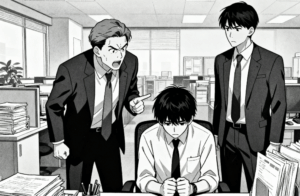
2) Unlawful Termination (According to Article 48 of Labor Contract Law)
If fired without cause, you are entitled to:
– 2N compensation.
– Reinstatement if you prefer to keep your job, but we don’t recommend it, as usually it’s not a good experience to stay.
3) Evidence Collection -Which Is Crucial for Legal Claims
To prove workplace PUA, gather:
– Emails/chat logs (showing unreasonable demands or harassment).
– Pay slips and contracts (proving pay cuts or demotions).
– Witness statements (colleagues who observed mistreatment).
– HR meeting recordings.
3.What Should You Do If Facing PUA?
Step 1: Do NOT Resign Immediately
– Resigning voluntarily means no compensation .
– Instead, force the company to fire you if they want you gone.
Step 2: Document Everything
– Keep records of unfair treatment, pay cuts, or harassment .
– If given an unfair PIP, request clear, measurable objectives in writing.
Step 3: Negotiate or File a Complaint
– Talk to HR (in writing) demanding fair treatment.
– If ignored, file a complaint with the local Labor Bureau .
– If fired unlawfully, demand 2N compensation via labor arbitration .
4. Conclusion: Stand Your Ground
Many companies use psychological tactics to avoid paying severance. Do not fall for it. Instead:
✅ Refuse to quit under pressure.
✅ Collect evidence of mistreatment.
✅ Use labor laws to claim rightful compensation.
If your employer is pushing you out unfairly, consult a labor lawyer to explore legal action. Remember: The law is on your side—use it!
Additional Resources
Labor Dispute Hotline: 12333 (Ask one of your Chinese friends to call it for you, as few of the staff answer the phone speak English)
Would you like help drafting a formal complaint letter to local labor bureau? Let us know!