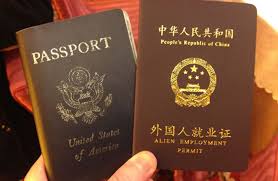
WFOE Formation in China—Simplified Now

As we mentioned in our previous blog: Wholly Foreign Owned Entity- WFOE formation in China is more simpler, easier and faster now. The following aspects have changed.

1 ) No more minimum registered capital requirement.

Actually, there has been no minimum registered capital requirement for company formation since 2014,as the new Company Law of PRC specifies.

For companies invested in by Chinese, no more minimum registered capital is required. However in reality, minimum registered capital is still required by the local authority for WFOE formation.  Actually, it’s not something unusual in China. It’s not something unusual in China, since local authorities would rather wait until more detailed instructions are given out each time a new law becomes effective.

Yet in 2018, we found that minimum registered capital is not required even for WFOE formation. There is also no more deadline for capital injection, the period for capital injection could be as long as the duration of the WFOE.

2)No more pre-approval-for general WFOE

Another headache for overseas investors is applying for pre-approval with the local commerce administration before applying for setting up the WFOE with the local AIC.  To get the pre-approval, the investors are required to submit articles of association, feasibility reports, etc. Sometimes it may take 3 months or even longer to get this pre-approval.

However, as of the 30th of June, 2018, pre-approval is not required anymore, as long as the business involved is not listed in Notes on Special Management Measures for the Market Entry of Foreign Investment (also referred as the “Negative List”) .

After the business license is issued by the local AIC, overseas investors can carry out the record-filing procedure online by submitting related information via the “Comprehensive Management System” supervised by the Ministry of Commerce.  Usually, a record-filing acknowledgement will be issued within three business days.

According to this Negative List, most business engaged by overseas SMEs is open to foreign investors and shall be managed according to the principle of “equal treatment of domestic and foreign investment”.

Besides, other procedures are also simplified, such as registration with State Administration of Foreign Exchange (SAFE), which could be finished while opening the bank account.  In some cities, the presence of the legal representative is not required any more to open the bank account, as long as the original passport of the legal representative is presented.

Of course, though the overall procedure is simplified, particular requirements vary from city to city.  You may wish to contact us for specific information before you make any plans.

Useful link:

State Administration for Market Regulation

Tax in china – Reduction in 2019!

To encourage the development of small and micro-profit enterprises, the Business Tax in China is also undergoing positive reforms. In this regard this year china has decided to roll out a new batch of tax-reduction policies. Related to this, a statement was released after the State Council executive meeting on Jan 9, 2019.

These policies include:

1. Substantial drops in China business income tax:

1) The rate for those enterprises whose annual taxable income does not exceed 1 million yuan, is reduced to 25% of original rate (20%). Therefore the actual tax rate will be 5%.

2) The rate for those enterprises whose annual taxable income falls between 1 million yuan to 3 million yuan, is reduced to 50% of original one.  Hence the actual tax rate will be 10%.

2. A considerable increase in the China tax threshold:

For small-scale taxpayers ( including small and micro-profit enterprises etc.), the value-added tax (VAT) threshold will be increased from 30,000 yuan to 100,000 yuan in monthly sales. In this way, VAT will only be charged on the portion of monthly revenue which is above 100,000 yuan.

3. China to allow local government to impose a reduction in local taxes and fees within 50% ranges.

Also, it is said the above-mentioned tax reduction policy will be tentatively valid for three years. But implementing rules haven’t been given out by related authorities yet.

Besides, another noteworthy situation is: it was stated that all social insurances premium shall be collected by tax authority as of 1st of Jan, 2019, and fine for not paying or not pay in full of social insurance premium will be levied strictly according to law as early as August, 2018.  Such statement has caused extensive panic among enterprises which are worried about sever penalty.  However, according to resources from some provinces, only the pension for residents and public institutions employees will be collected by tax authority, collection of pension for enterprises employees will maintain the status quo for the time being.

Related post: Tax Reduction in China-More Details

Useful link:

State Taxation Administration

Two Ways of Trademark Registration in China

1. Trademark registration, international way vs national way

For overseas applicant, there are two ways to do trademark registration in China.

China is a party to World Intellectual Property Organization (WIPO). So companies can submit trademark application to the WIPO International Bureau through the office of origin. This application will go through formal examination by the Bureau and then substantive examination by China’s Trademark Office (CTMO). Here the overseas applicant may extent their application to China under the Madrid Protocol.  That is called International way.

On the other hand a Chinese trademark agent can be hired to apply for trademark directly with CTMO. In this way you get a Certificate of Trademark granted directly by CTMO. That is called the national way. For more information, you may check our post: Trademark Registration in China – Procedure

2. What’s the differences between these two ways?

Technically, national or international way, are just different channels for application filing. Thus, the differences are mostly procedural. Eventually, both ways follow the same examination standard based on China’s trademark laws and regulations. And more importantly, the substantive rights granted are the same. Both way are valid for ten years and can be prolonged for a subsequent 10-years protection period.

3. Trademark registration in national way is more convenient

However, for practical reasons you may wish to apply through the national system.

Firstly, application through national system usually is faster.  The time limit for international way is 12-18 months from the date of international notification. This usually will be granted in 6 months after submission of the application. Hence, totally one and half to two years; while it’s one and half year for national way. 

trademark registration in China

Secondly, if you use the international system, you will get the certificate issued directly by the WIPO, which is in English or French. 

However, as administrative authorities and courts in China will ask for a Chinese language document as proof of your right. If you want to enforce your rights or help to speed up proceedings when dealing with local authorities, you need to obtain such certificate from the CTMO to certify your right. Usually it may take three months or longer and don’t be surprised if it takes more. CTMO once suspended issuing trademark certificates for 7 months just because they used up their paper!

Another problem is, sometime some local agency or institution only know about the certificate issued by CTMO (granted through national way), with the national emblem of PRC on the top of the paper. It really takes some time and effort to convince them that your document are also officially recognized and enjoy the same right, as one of my clients once experienced.

Useful link:

TRADEMARK OFFICE OF NATIONAL INTELLECTUAL PROPERTY ADMINISTRATION, PRC

IIT in China, Rumors and Solutions…

It’s 2019 now.  Discussion over the new IIT law is still ongoing and all kinds of rumors could be heard.

IIT is always a complicated issue around the world and tax planning is very important!

One rumor says that “banks will report any expat account with a balance over 5000RMB”. It’s really absurd, in my opinion. Obviously, the source mixed the updated IIT threshold (5000RMB) with an unupdated regulation- Administrative Measures for the Reporting of Large-sum Transactions and Suspicious Transactions by Financial Institutions, which actually came into effect as recently as July 1, 2017, but was extensively discussed later last year.

So, relax. First, there were related measures back in 2006, so it’s nothing new.

Second, anti-money laundering and anti-terrorism is the main purpose, as stated in article 1 of the Measures.

Then what does it say exactly?

A financial institution shall report the following large-sum transactions: 

(1) Cash

cash deposits, cash withdrawals, foreign exchange settlements and sales in cash, exchange of foreign currencies in cash, cash remittance, payment of cash bills and other forms of cash receipts and payments whose transaction value reaches or exceeds RMB 50,000 or foreign currency equivalent of USD 10,000 on a per-transaction or cumulative basis on a given day; 

(2) Fund transfers

whose transaction value reaches or exceeds RMB two million or foreign currency equivalent of USD 200,000 on a per-transaction or cumulative basis between the bank account of a client that is not a natural person and another bank account on a given day; 

(3) Domestic fund transfers

whose transaction value reaches or exceeds RMB 500,000 or foreign currency equivalent of USD 100,000 on a per-transaction or cumulative basis between the bank account of a natural person client and another bank account on a given day; and 

(4) Cross-border fund transfers

whose transaction value reaches or exceeds RMB 200,000 or foreign currency equivalent of USD 10,000 on a per-transaction or cumulative basis between the bank account of a natural person client and another bank account on a given day.

Cumulative transaction value shall be calculated and reported on a per-client basis by unilaterally adding up the receipt or payment of funds.

I have clarified this already, and it does have something to do with IIT.

As part of the efforts of tax agencies to strengthen their taxation management, they will use data from financial institutions to do so in near future.  Actually, people have been caught by the tax agency when they use their personal bank account to receive payments from their company account and heavy fines have been charged.

So my suggestion is: if you are doing business in China as an individual, it’s time to consider setting up a WOFE now.  Everyone can see expenses exempted from an individual income is too limited, while any reasonable expenses can be treated as the cost of company operation, as long as Fapiao are provided.

The threshold for incorporating a WFOE is pretty low today.  There is no more deadline for fund input, no more minimum capital requirement, no more month long pre-permission from the Ministry of Commerce of PRC, and in some city such as Guangzhou, you can share office with other people… as long as you can provide a legitimate ID, it may takes ten days to get your license ready! You don’t even have to authenticate your passport in the embassy in your home country if there is a China entry record in your passport.

What do you think?

Useful link:

MINISTRY OF COMMERCE OF THE PEOPLE’S REPUBLIC OF CHINA

Trademark Registration in China – Procedure

As discussed in our previous blog, it is best to apply a first-to-file approach for trademark registration in China.  In this post, we are going to share the procedure for trademark registration in China. After reading this article you will know for sure what to pay attention to.

1.  Find a trustable trademark agent

Any overseas individual or entity who wants to go for trademark registration in China needs to hire a trademark agent to do so. Though you can easily find a lot of consultancy companies online claiming that they can do it for you, and some of them charge a unbelievable low price but be careful.

  The law does not require that only a lawyer can be an agent for trademark registration in China, however experience and qualification of the agent definitely is something very important.  Obviously experience and professional skill instead of a good price should be the main elements when you choose the agent. 

You thought you could save some money by choosing a cheap agent. But more than often, you will find the terrible service actually cost you more in terms of money or time, or even worse, you may lose your trademark forever!  ( In step 3, we will show you why it’s important to choose a qualified agent.)

2. Prepare the required information for your trademark registration

1) Usually a trademark is a Logo–graphic trademark, or text (which need to be in a specific font) or a combination of both;

2) Copy of the passport, if the applicant is an individual or copy of certification of incorporation, if the applicant is an entity;

3) Name and address of the applicant;

4) List of items(product and/or service) the trademark applies to, you may check the Nice classification to choose the suitable items. http://www.wipo.int/classifications/nivilo/nice/index.htm

3.  The agent will review it and give counsel accordingly

This step is very critical and that’s why a qualified agent is so important.  Because they will review your trademark in two ways, just as a reviewer in the Chinese Trademark Office (CTMO) do:

  1. For trademark registration in China the agent searches the governmental database for identical or similar trademarks that are already registered. The agent also checks for trademarks that have been applied for both preliminarily approved and pending approval (but not yet registered). Search in database seems an easy job.  But knowing how to do cross search and to analyze the result correctly needs experience. An experienced agent also could offer a proposal for better and comprehensive protection of your trademark.
  2. Review to decide if it’s in conformity with the Trademark Law in the following three aspects:  

(1)Legality.

For example, it could not be identical with or similar to the State name, national flag, etc.; nor detrimental to socialist morality and custom or having other ill effects;

(2)Distinctiveness.

A sign can not be registered as a trademark if it consists;

  • only of a direct representation of the quality,
  • primary raw materials,
  • or it consists only of generic names of the goods concerned.

For example, you can not apply for “milk powder” as the trademark for infant formula, or “sweet” for candy;

(3) Non-functionality.

A sign shall not be registered as a trademark if it tells the function of your product or service, for example you can not apply for “detective” for your detective service.

An experienced agent will review your trademark and analyze the search result and evaluate the application thoroughly and advice of possible solution.  While a terrible agent will just submit your application to the CTMO and then one year later inform you that your application has been rejected.

4. Timeframe and procedure

The CTMO will initiate a substantial examination as described in step 3 once your application is submitted. It may take three months to do it.

If the examination reveals that the trademark application is in conformity with the Law and that there is no other prior trademark, your trademark application is preliminarily approved and will be published in the Official Gazette for three months.

The registration will be approved if no opposition has been filed in these three months and a certificate of trademark will finally be issued. Total timeframe will be one and half year.

Individual Income Tax in China – How to Pay in 2019?

As of January 1, 2019, a new system of individual income tax in China is going to be formally implemented.  As expats working or doing business in China, what should you know about the new law?

1. Who should pay and what income will be included?

1) Expats have resided in China for accumulative 183 days or more in one tax year shall be resident individuals.  Resident individuals shall pay IIT on their income gained within or outside China.

2) Expats have resided in China for less than accumulative 183 days in one tax year shall be non-resident individuals. Non-resident individuals shall pay IIT on their income gained within China.

2 What kind of income should pay

Under this new system, personal wages, salaries, remuneration for labor services, income from author’s remuneration, and income from royalty shall all be treated as the comprehensive income and will pay individual income tax after deduction of certain expenses.

However, insurance indemnities shall be exempted from the levy of individual income tax.

According to this provision, rich tax payer could leave wealth to their descendants without worrying about tax, by buying life insurance with themselves as the insured and their descendants as beneficiaries.

3. What expense could be deducted?

Six items of expenses related to people’s livelihood will be deducted, including:
– children’s education,
– continuing education,
– serious illness medical treatment,
– housing loan interest
– housing rent,
– support for the elderly. 

The tax payer can report to the withholding agent about each item of expense. Similarly, the tax payer can also report to tax bureau online directly.

4. How to pay the income tax in China?

The IIT will be pre-withheld by the withholding agent who is usually the employer where salary is involved. Whereas in case of business, the payer becomes the withholding agent. The period can be on a monthly basis or whenever they pay the income.  From 1st of March till 30th of June of next year, the tax-payer will report to tax bureau and filing annual reconciliation return. However, no further details about how to file it have been announced.

Till today, no extra explanation has been made about whether the original tax concessions for expats still works. However, given that six items of expenses could be deducted according to the new law, there exists a possible revocation of the original tax concessions.

We will see.

Individual Income Tax Rates (Applicable to comprehensive income)
  

Grade Annual taxable income in China Tax rate (%)
1 Income of RMB 36,000 or less 3
2 The part of income in excess of RMB 36,000 to 144,000 10
3 The part of income in excess of RMB 144,000 to 300,000 20
4 The part of income in excess of RMB 300,000 to 420,000 25
5 The part of income in excess of RMB 420,000 to 660,000 30
6 The part of income in excess of RMB 660,000 to 960,000 35
7 The part of income in excess of RMB 960,000 45

Related post: Tax Reduction in China-More Details

Useful link:

State Taxation Administration

Protect Your Trademark Better— Register the Copyright!

I assume we don’t have to emphasize how important it is to register  and protect your trademark.  Although we recommend our client to register their trademark as extensively as possible but not all companies would choose to register it in all categories, considering the high cost associated with register and maintain the trademark. Otherwise, the trademark could be applied for “Non-use cancellation” if it’s not been maintained properly.

Fortunately, we have another option. We can apply for registration for copyright of graphic trademark (logo).

And yes, you are right.  Graphic trademark is also an artistic work, which is covered by the copyright law.  And registration for copyright also constitutes protection for trademark, of course, in a different way.

The main difference is as follow:

1. Differences in timeframe and procedure:

Registration of trademark takes at least one and half year.  However, if there is any objection or rejection involved, it may take 2 or 3 years to finally get it.

However, registration of copyright is simpler and the success rate is pretty high,it could be finished in 1-2 months.  It helps to protect your logo while you are waiting for certificate of trademark being granted.

2. Extent and scope of Trademark protection:

Under the trademark law, every trademark should be registered under certain category. However, this protection is only limited to the very registered category.  Furthermore, the use of any similar mark under this specific category or any mark that leads to confusion about the provider of goods or services is also forbidden.

However, the scope of copyright protection is more extensive, it covers all goods and services without any limitation.  Once registration is completed, the graphic cannot be used in any commercial occasion without authorization and are not restricted by the specific categories of trademark. In another word, the protection of trademark is more powerful but limited, while copyright is more extensive but “superficial”.

3. Prior right to Trademark

Trademark Law of PRC dictates, trademarks that conflict with the prior rights (including copyrights) of others can be revoked and deemed invalid. It means if you own the copyright of certain logo, you can use this provision to object and to ask for revocation of anyone else’s application if he registered this logo before you did or tried to register your graphic trademark under other category that you didn’t register previously.

4. Term and cost of Trademark registration

The term for registered trademark is ten years and you should pay to renew it within 6 months before it expire. On the other hand, the term of a copyright is at least 50years without any requirement for renewing. Hence, the cost is comparatively low.

In one word, registration of copyright is fast, cheap and the protection is more extensive and longer. Register copyright of your graphic trademark is a cost-effective way to better protect your trademark.

You are welcome to contact us here for further details on protecting your trademarks in China.

IPR Infringement in China – Five Ways to Stop It

While there are still challenges regarding intellectual property protection system in China, with the recent law reforms it has markedly improved making it easier to stop IPR infringement in China, particularly in first tier cities and surrounding areas.

Now there are a number of ways you can take for IPR protection. In this article we are going to explain the five most popular methods the IPR owners can use to protect their interest. Let’s use trade mark as an example.

1 . Administrative route:

1) Customs Protection

This way is proved to be a cost-effective way to stop IPR infringement is to stop infringing goods leaving China.

All you have to do is to file the Customs protection of IPRs with the General Administration of Customs (GAC), GAC is a centralised authority which can apply their control at the border to merchandise coming in or going out. Once you register your trademark with GAC, GAC will take the initiative to detain suspicious goods, meaning any goods not exported by you or your authorized factory could not leave China.

Advantage:

1. The biggest benefit of Customs IPR protection is that the IPR owner don’t have to provide any information of the infringer.  Because more than often, they just have no clue where or who the infringer is.

2. It only takes 3 months to finish the procedure.

Disadvantage:

Customs protection of IPRs can only stop counterfeit exported from China, but can do nothing to stop the infringer selling it in China.

Reminder:

The term of Customs protection of IPRs is 10 years. You have to file for renew it within 6 months before expiration of the current term.

However, if the valid term of your trademark is less than 10 years, the valid term of filing shall be the valid term of the IPR.  So it’s very very important to renew your trademark in time too!

 2) AIC raid

If you find anyone is manufacturing, selling or storing infringing goods, you could lodge a complaint with local Administration for Industry and Commerce (AIC) where the infringement is committed, by sending evidence of the infringement (such as samples of the infringing product, photo or video of the shop or factory).

If the AIC decides there is a solid case then they will launch a raid with the goal to investigate and seize infringing goods.  After the conclusion of the raid, AIC will order the infringer to cease infringement, confiscate and destroy all goods and tools specifically used in the production of the infringing articles.

AIC may also impose a fine, where the amount is relative to the size of infringement and will not be more than five times the amount of the illegal business. In cases where no fine can be calculated, a fixed amount will be imposed by the AIC of up to RMB 250,000.

Advantage:

1. Usually it’s fast, compared to judicial route.

2. Any documents AIC produces during this procedure could be used as evidence in judicial route.

Disadvantage:

1. Sometimes, such raid can only stop the infringement temporary and locally.

2. The owner can’t get any compensation from the fine imposed by the AIC. Granting of compensation is exclusively the domain of the Chinese People’s Courts.

2. Judicial Route

1) Civil procedure

IPR owners may file a lawsuit against the infringer once they have enough evidence. Though it is possible that the court may order an inspection, in reality for any IPR infringement in china the evidence has to be collected by yourself (we will discuss about requirement for evidence in separate blogs).

The whole procedure may take more than six months or even couple years, however the specific length depends largely on the complexity of the case.

If finally an award in favor of the owner is made, the following remedies are available:

* An injunction to cease the infringements

* Confiscation of all infringing goods, as well as the machinery and equipment used to produce these

* Damages paid by the infringer

 Usually, damages are determined based on:

* Owner’s losses because of the infringement.

• Illegal profits gained through the IPR infringement in China.

• Time of the royalties of the registered trade mark when both the losses and the infringer illegal profits are hard to determine.

 • Where calculation of the above three points is hard, the court can, based on the circumstances of the infringement, impose damages of up to RMB 3,000,000.

2) Criminal procedure

Producing or knowingly selling counterfeit products, producing forged or unauthorised representations of trade marks constitutes crimes of IPR infringement in China according to Criminal law of PRC.

The trademark owner can report a crime to the public security, which have the power to detain suspects and interrogate them and also search and inspect premises without restraint.  If the public security decide that there is a crime, they will forward all file to the People’s Procurator in order to bring a criminal case before the court.

The penalties for a trademark crime could be fine plus fixed term imprisonment of not less than 3 years where conditions are “ serious” or the sales are “large”; or not more than seven years where the conditions are deemed “extremely serious” or the sales are huge.

Advantage:

Criminal penalty is the severest punish to infringer, and could effectively stop the infringement.

Disadvantage:

1. There is a threshold for procurator to bring a criminal case before the court. 

2. The trademark owner will not get compensation from the fine paid the infringer.  He can only get compensation by filing civil suit collateral to criminal proceedings.

3. IPR Infringement on E-commerce platforms

E-commerce in China has boomed greatly recent years. With it, some big platforms have set up a system to stop IPR infringement in China too, such as Alibaba, JD, etc. IP owner can file complain with the platform, if they found any IPR infringement on their platforms.

Once the IP owner’s identity and intellectual property rights documents have been verified, infringing product will be taken down from product listings.

Advantage:

It’s very fast and convenient to proceed.

Disadvantage:

Infringement could only be stopped in the platform, but can’t be eliminated effectively.

Tip:

1. These enforcement routes can also be combined to achieve a successful outcome.

2. Except in customs route, all the above mentioned route needs necessary evidence.  Especially in civil procedure, evidence is very crucial for win a case with a satisfied outcome.  Hence, be careful not to alert the infringer before you have enough evidence.  However, a lawyer letter can only be sent out to seek for a possible settlement after all necessary evidence is collected.

3. Except for in E-commerce platform, IPR registered in China is the prerequisite for all protection.  So once more our reminder, register your IP in China ASAP.

Also you can get more information on our article https://chinalawhelp.com/how-to-get-my-brand-back-in-china/