Abstract of Foreign Investment Law of PRC

China’s national legislature on Friday passed the Foreign Investment Law in Beijing on March 15, 2019.  This landmark legislation aims to provide stronger protection and a better business environment for overseas investors.

With unified provisions for the entry, promotion, protection, and management of foreign investment, it is a new and fundamental law for foreign investment in China.

It aims to improve the transparency of foreign investment policies and ensure that foreign-invested enterprises participate in market competition on an equal basis.

Let’s see the main content:Foreign investment law of PRC will come into effect on 1st of Jan, 2020

1.Identity of foreign investment

foreign investment refers to investment activity within the territory of China,directly or indirectly conducted by foreign natural persons, enterprises and other organizations (the “foreign investors”), including the following circumstances:

1) a foreign investor establishes a foreign-funded enterprise, independently or together with any other investor; and

2) a foreign investor acquires shares, equities, property shares or any other similar rights and interests of an enterprise within the territory of China; and

3) a foreign investor invests in any new construction project, independently or together with any other investor; and

4) other foreign investment within the territory of China in any other way stipulated under laws, administrative regulations or provisions of the State Council.

The above mentioned foreign-funded enterprise refers to an enterprise incorporated under Chinese laws within the territory of China and with all or part of its investment from a foreign investor.

2. Market Entry

The State shall implement the management systems of pre-establishment national treatment and negative list for foreign investment; save as otherwise provided under international treaties or agreements that the People’s Republic of China concludes or joins in, such provisions shall prevail.

For the purpose of the preceding paragraph, the negative list refers to special administrative measures for access of foreign investment in specific fields as stipulated by the State. The negative list will be issued by or upon approval by the State Council.

3. Investment Protection

The State shall protect foreign investors’ investment, earnings and other legitimate rights and interests within the territory of China according to the law.

4. Standardization Work

Foreign-funded enterprises shall equally participate in standardization work, and information disclosure and social supervision shall be reinforced for the formulation of standards.

The compulsory standards formulated by the State shall equally apply to foreign-funded enterprises.

5. Government Procurement

The State shall guarantee foreign-funded enterprises’ fair participation in government procurement activities. Products produced by foreign-funded enterprises within the territory of China shall be equally treated under government procurement.

6.Intellectual Property Rights Protection

The State shall, according to the law, protect the intellectual property rights of foreign investors and foreign-funded enterprises, protect the legitimate rights and interests of holders of intellectual property rights and the relevant right holders, and encourage technology cooperation on the basis of free will and business rules.

In the process of foreign investment, technology cooperation conditions shall be determined by all investment parties upon negotiation, and no administrative organ or functionary working therein shall force the transfer of technologies by administrative means.

7. Effective Date

The Law shall come into force as of 1st of Jan, 2020. The Law of the People’s Republic of China on Sino-foreign Equity Joint Ventures, the Law of the People’s Republic of China on Wholly Foreign-owned Enterprises and the Law of the People’s Republic of China on Sino-foreign Cooperative Joint Ventures shall be annulled simultaneously.


Corporate Burdens-Reduced Further

On 5th of March, 2019, Premier Li Keqiang delivered the Government Work Report to the second session of the 13th National People’s Congress in Beijing.

Here are the highlights:

1. Corporate burdens

In our previous blogs: Tax in china – Reduction in 2019! and Tax Reduction in China-More Details, we talked about the tax cut policy starting from 1st of Jan, 2019.  Further, China aims to reduce the tax burdens and social insurance contributions of enterprises by nearly 2 trillion yuan ($298.3 billion) in 2019, as part of its broader push to promote manufacturing and fuel the growth of small and micro-profit businesses.

The government will deepen the value-added tax reform, reducing the current rate of 16 percent in manufacturing and other industries to 13 percent, and lower the rate in the transportation, construction, and other industries from 10 to 9 percent.

As for social security, the government will cut the proportion of basic endowment insurance units for urban workers, which will be reduced to 16%. The report notes that this year it is important to make the burden of social security contributions for enterprises, especially small and micro-profit enterprises, substantially decline. To this end, all local governments, shall not take the practice of increasing the actual contribution burden of small and micro-profit enterprises, and shall not carry out centralized payment of historical arrears on their own, to ensure stabilization of current mode of payment.

Corporate burden will be reduced further--highlights of the central government work report

 2. Broadband, mobile internet rates

China will further cut the rates for broadband and mobile internet services, as the nation steps up push to nurture innovation and speed up the growth of emerging industries.

This year, average broadband service rates for small and medium enterprises will be lowered by another 15 percent, and average rates for mobile internet services will be further cut by more than 20 percent.

3. High-tech sector

China will continue to upgrade its traditional industries, support the emerging high-tech sector, and increase support for basic and applied research.

The country will strengthen its innovation capabilities, boost the integrated development of advanced manufacturing and modernized services, and create industrial internet platforms to facilitate the transformation and upgrading of  manufacturing.

4. Green measures

China will pursue both high-quality development and environmental protection by reforming and refining relevant systems. Green development is a critical element of modernizing an economy and a fundamental solution to pollution.

China plans to reduce sulfur dioxide and nitrogen oxide emissions by 3 percent in 2019, while making continuous effort to decrease the density of PM 2.5, a major particle pollutant, in key locations, including the Beijing-Tianjin-Hebei region, the Yangtze River Delta region and the Fenhe-Weihe River Plain area.

5. Elderly care sector

China will take significant steps to develop the elderly care sector, especially community services, in 2019 as the number of people aged 60 and above has reached 250 million.

The country will provide support to institutions offering services in communities, like day care, rehabilitation, assisted meals and assisted mobility, by using measures such as tax reductions, fee cuts and exemptions, funding support, and reduced charges for water, electricity, gas and heating.

6. Rural students

China will beef up efforts to cut the dropout rates of rural students and improve their college enrollment numbers to stop poverty from passing down to the next generation.

A quota system will also be used to boost attendance of rural students at top universities.

7. Vocational education

The country will take strong moves to develop modern vocational education to help ease current employment pressure and address the shortage of highly skilled personnel.

A vocational skills training initiative will be implemented with 100 billion yuan ($14.9 billion) from the surplus in unemployment insurance funds allocated to provide training for the 15 million targeted attendees, helping job seekers to upgrade skills or switch jobs or industries.

8. Opening-up

China will open more sectors and improve the process of opening-up. The country will continue to promote opening-up based on flows of goods and factors of production, and give greater emphasis to opening-up based on rules and related institutions.

China will continue to push forward China-US trade negotiations. The country is committed to mutually beneficial cooperation and aiming to settle trade disputes through discussions in an equal manner.

9. Employment

China will create more than 11 million new urban jobs this year and keep the urban unemployment rate within 4.5 percent. Multiple channels will be used to achieve stable and expanding employment in 2019.

Having taken prompt steps to ease the impact of changes in the external environment on employment, the central government of China will work to ensure employment for key groups such as college graduates, demobilized soldiers and migrant workers.

Useful link:

The State Council of PRC

Close Your WOFE Properly-Don’t Just Give It Up!

Incorporating a WOFE in China is easier now, however, shutting down a WOFE remains complicated as ever. Some foreigners think: if they don’t conduct the annual registration  and tax filings, then they can just give up the WOFE.  They are wrong, wrong, wrong!

1. Direct consequence

If any WFOE owner don’t conduct the annual registration and tax filings, the direct consequence is the local AIC (Administration of Industry and Commerce) will revoke the business license  and the WFOE can’t do business any more, but it doesn’t mean everything related to the WFOE will be eliminated.

Most important, liability to taxes, government fees and employee salaries is still there.

2. Personal liability

Close WFOE properly is very important

First of all, the legal representative, directors and shareholders of the WOFE will be put in a blacklist which will be issued to all SAIC offices in China  and PRC border control authority.

Usually, people on the blacklist will not be permitted to do any investment or management of any company for three years, and their entry to PRC will be refused if they want to revisit China someday.

Moreover, if the WFOE owes any taxes, fees, salaries or debts, the legal representative and directors could be prosecuted by the PRC authorities.

3. Best way to do it properly

Technically speaking, anyone who does not have enough funds to maintain the company  could file for bankruptcy liquidation with the court based on the PRC bankruptcy laws. However, it seems that no WOFEs are going through this procedure, likely because it is complicated as well as  time and fund-consuming.

So let’s de-register it with local AIC.

First, pay all debts, especially all debts to employees (salary) and to the government (tax).
Then,  go through a long drawn-out government audit, which is far more complicated and time consuming  than you could ever think of. Considering this, it’s strongly recommended that you do it earlier and have a sound plan for it-in both timing and funds.

Anything else?

Useful Link:

State Administration for Market Regulation

Outline for the Development Plan of Great Bay Area

On 18th of Feb, 2018, the China central government issued the Outline for the Development Plan of Guangdong, Hong Kong and Macau Bay Area, the main points of the outline is listed as below:

On 18th of Feb, 2018, the China central government issued the Outline for the Development Plan of Guangdong, Hong Kong and Macau Bay Area

1. Division of Great Bay Area

The “Guangdong, Hong Kong and Macao Bay Area includes the HKSAR, Macau SAR and Guangzhou, Shenzhen, Zhuhai, Foshan, Huizhou, Dongguan, Zhongshan, Jiangmen, Zhaoqing of Guangdong province, with a total area of 56,000 square kilometers, and total population of about 70 million in late 2017.

This area is one of the regions with the highest degree of openness and the strongest economic vitality in China, which plays an important strategic role in the overall development of the country.

2. Finance

Gradually expand the scale and scope of RMB cross-border use in the Great Bay Area.

Promote cross-border transaction of financial products such as funds and insurance in the area in well-organized way.

Continuously enrich investment product categories and investment channels, and establish mechanisms for exchange of funds and products.

3. Airport Construction

The outline also proposes to support the construction of the third runway of HK Airport and the reconstruction and expansion of Macau Airport, and the implementation of the airport reconstruction and expansion of Guangzhou and Shenzhen.

It also proposes develop pre-research work of the new airport in Guangzhou, research and construct some feeder or general airport.

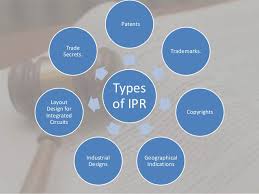
4. Intellectual Property Rights ( IPR )

Relies on the regional IP cooperation mechanism between Guangdong and Hong Kong, Guangdong and Macau and the Pan-Pearl River Delta region to comprehensively strengthen cooperation of IP protection and professional training in the area.

Strengthen administrative law enforcement and judicial protection of IP, give better play to the role of Guangzhou IP Court and other institutions, strengthen IP law enforcement in e-commerce, import and export and other key areas.

5. Communications

Will take multi-measures to achieve a reasonable decline in communication fees, promote the reduction of long-distance and roaming charges for mobile phones in the area.

Actively carry out a feasibility study to eliminate long-distance and roaming charges for mobile phones and provide infrastructure support for construction of smart cities.

6. Technical Exchanges

Promote the “Guangzhou-Shenzhen-Hong Kong-Macau” Science and Technology Innovation Corridor construction.

Explore the policy which is to the benefit of cross-border movement of talent, capital, information, technology and other innovative elements of and regional integration.

7. Science and Technology Industry

Promote the development of new generation of pillar industry, such as information technology, biotechnology, high-end equipment manufacturing, new materials.

Cultivate a number of major industrial projects in key areas, such as new display, new generation of communications technology, 5G and mobile internet, protein and other biomedical, high-end medical diagnostic equipment, genetic testing, modern Chinese medicine, intelligent robot, 3D printing, Beidou satellite applications etc.

8. Capital Market

Support Shenzhen to develop capital market with Shenzhen Stock Exchange as the core, accelerates innovation of financial openness.

9. Tourism Industry

Promote effective implementation of yacht free travel in the area, speed up improvement of hardware and software facilities.

Jointly develop high-end tourism projects. Explore the construction of an international yacht travel free port in suitable area.

10. Talent Policy

Encourages Chinese citizens in Hong Kong and Macau to hold positions in the state-owned enterprises in mainland. 

Study and promote Chinese citizens in Hong Kong and Macau to apply for position of civil servants in mainland.

11. Integration

Implements the CEPA series agreements between the mainland, HK and Macau. Promote implementation of special open measures for HK and Macao in the areas of finance, education, legal and dispute resolution, shipping, logistics, railway transport, telecommunications, Chinese Medicine, construction and related projects.

Study the further abolition or relaxation of restrictions to HK and Macau investors, such as qualification requirements, shareholding ratios and Industry access, etc.

Provide one-stop service for HK and Macau investors and related practitioners.  

Make sure better implementation of opening up measures for HK and Macau under the framework of CEPA.

Divorce in China-What Options You Have?

If for some reason, the couple have to split up, what to do in China?

There are two options.

1. Split up peacefully by signing a divorce agreement.

Under this situation, the couple shall apply to local Civil Affairs Bureau for divorce. The Civil Affairs Bureau will issue a Certificate of Divorce if they are convinced that:  

1) the couple are indeed willing to split up and;

2) they have made proper arrangements for bring-up of kids and have properly disposed of their asset.

Divorce in China-what options do you have

2. File a lawsuit if can’t split up peacefully.

If either the husband or wife doesn’t want to split up, or if though the couple both want to split up, but fail to reach an agreement about how to bring up the kids or dispose their asset, then either party could file a lawsuit to get divorced.

Just like in any civil cases, the couple may hire lawyer to represent themselves in the court. However, the couple should participate in the court hearing in person even they already hired a lawyer.

As a rule, the court shall make mediations during court hearing, which is a necessary procedure in a divorce suit. Divorce shall be granted if mediation fails and the judge is convinced that mutual affection between the couple doesn’t exist any more.

Besides, if any of the following circumstances occurs and mediation fails, divorce will be granted:
a. either party is a bigamist or co-habits with a third party;
b. there is domestic violence or abuse or abandonment of any family member;
c. either party is indulged in gambling, drug-abuse or has other vicious habits;
d. the couple have been separated due to emotional incompatibility for up to two years;
e. other circumstances that lead to breakdown of the couple’s feelings.


However, the husband may not file a divorce suit when his wife is pregnant, or within one year after giving birth to a kid, or within six months after interruption of pregnancy. But usually, this restriction shall not apply to the case where the wife files a divorce suit.

3. How to split asset

As mentioned in our previous blog: Personal Asset or Family Asset? both husband and wife have equal right in the disposal of the family asset, so usually split of the family asset is fifty-fifty.

both husband and wife have equal right in the disposal of the family asset, so usually split of the family asset is fifty-fifty.

However, In any of the following circumstances, the innocent party shall be entitled to claim damages:
a. bigamy;
b. co-habitats with a third person;
c. domestic violence;
d. abuse or abandonment of any family member.

4. Who to bring up the kids

Either parent has the right and the obligation of upbringing their children, even if after divorce.

Usually, kids during lactation shall be brought up by their mother.

For kids after lactation, the judge will make the decision based on the specific conditions of both parties, such as the income level, education background, personality and relationship between the kids and parent, sometimes, the parent’s respective family will be taken into consideration too, such as if the grandparent is willing to support the parent to bring up the kids. In one word, the judge will consider which way is better for the kids, sometimes they will consider if the kids used to be taken care of by dad or mom.

For kids over ten years old, the judge will consider their personal willingness too.  

Is it clear enough?

Personal Assets or Family Assets, Can You Tell?

One of our clients called recently, he said he was going to get married to his Chinese fiancé. He wanted to know what’s the Chinese Marriage Law’s provision about family assets and asked if there is anything like prenuptial agreements in China. 

Generally speaking, a married person’s assets could be divided into family assets and personal assets. According to the Chinese Marriage law, if not otherwise agreed by the couple:

1. The following assets incurred during the marriage shall be family assets jointly owned by the couple, including:

a. wages and bonuses;
b. any income incurred from production or management;
c. any income incurred from intellectual property;
d. any property inherited or bestowed. However, if the deceased or donor failed to express specifically that the inheritance or bestowal will  only benefit the inheritor or donee instead of their spouse, then the property only belongs to this specified person.

e.others.

So if there is no agreement between the couple specifying otherwise, most of the income during the marriage should be jointly owned by the couple, even if only the husband or wife make money while the spouse have no income at all. Both husband and wife shall have equal rights in the disposal of the jointly owned assets.

Besides, if the couple get divorced, the family assets will be divided between the couple fifty-fifty.  But it could be a relief to most of the husbands, because there is no rule about alimony for ex-wives in China.  Though the marriage law does say if one party has financial difficulty, the other party shall provide some assistance from his/her personal assets.

2. Personal assets:

a. the pre-marital asset that is owned by one party;
b. the payment for medical treatment or living subsidies for the disabled arising from bodily injury on either party;
c. the articles of living specially used by either party,
d. others.

3. A written prenuptial agreement will be binding to the couple.

Prenuptial agreement could specify what asset is family asset or personal asset

The marriage law makes a general rule about what assets will be treated as family assets and what assets are personal assets, but the marriage law also specifies that the couple could come to an agreement otherwise. In another words, prenuptial agreements are allowed in China.  

The couple could specify in the prenuptial agreement if the assets during or prior to the marriage would be owned by each party jointly or separately.  The agreement should be in writing, but not have to be notarized to be effective.  If not all assets are jointly owned by the couple, it’s a smart move to draft a detailed list of assets and include the list as attachment to the agreement.  Also, it’s highly recommended to specify clearly how to pay the family expenses when the assets are not jointly owned by the couple.

Related post: Divorce in China-What Options You Have?

Useful Link:

Ministry of Civil Affairs of the People’s Republic of China

Employment Contract—Specify Terms as Detailed as Could

As we mentioned in our previous blog: Employee Handbook-Important Fact…, an employment contract has to contain some “essential clauses” as the content has been provided by related laws, which emphasize protecting the employee. 

However, in addition to the above mentioned clauses, employers could specify some clauses as to the probation period, training, confidentiality,  Non-competition,supplementary insurance, welfare and treatment and other clauses as they deem important. Employers could take advantage of other clauses to protect their interest, such as specifying that the employee has to work a certain number of years after the employer has paid for his/her training.
What else could be included? The following are some tips:

1. Disclosure of rules and regulations

Employer may stipulate in the employment contract that all rules and regulations have been disclosed to the employee ( such as “employee confirms that it has understood the contents of the company’s rules and regulations”, etc.), in order to prevent disputes concerning the effectiveness of the rules and regulations.

There is some room for employer to specify some clauses in the employment contract to make sure a effective management over the enterprise

2. Address for service

Employer may stipulate in the employment contract that all written notices shall be deemed to have been given on the date the notice is received at the employee’s address which is listed in the employment contract and the employee has the duty to inform the employer of any address change. In this way, the employer could fulfill it’s “informing duty” ( you may check our blog: Can I Fire an Employee Absent from Work? for more information) prevent the situation where the employee is reluctant to cooperate by refusing to sign or accept the notice.

   
3. Attachments

Employer may add the following attachments to the employment contract, to make sure the employee understands the employer’s requirements and their duty as employees and consequences if they fail to meet the requirements:

(1) The company’s rules and regulations;

(2) Employee’s letter of undertaking (employee has to promise the authenticity of all background information he/she provides);

(3) Duty,job requirements and assessment criteria for the position (as detailed, objective and reasonable as possible in order to be used as evidence, in the event of a labor dispute if the employer wants to terminate the employment contract due to finding the employee unqualified ).

Can I Fire an Employee Absent from Work?

Last week, one of our clients called me and asked: “An employee has been absent from work for three days, does that mean the employment contract has been terminated automatically and I can just let him go?”

That is a total misunderstanding.  There is no such provision in labor law that the employment contract would be automatically terminated, no matter how long the employee is absent from work without any justification.

Of course, being absent from work is definitely a violation of the employer’s rules and regulations, but it doesn’t mean that the employment contract would be terminated automatically. 

However, labor laws do specify that if employee seriously violate the enterprise’s rules and regulations, the employer is entitled to terminate the employment contract.  But, as we repeatedly emphasized, in labor relationship, it’s very important to follow the procedural requirement, even it is obviously the employee’s fault.

In most labor disputes, such as dismissal, termination of employment contract, reduction of remuneration etc., the burden of proof rests on the employer. Employer is required to provide justification for all decisions. Otherwise, the arbitration committee or the court could make an award in favor of the employee.

Employee's Employment contract will not be terminated automatically

Generally speaking, the employer has to take the following steps:

1. Prepare Rules and regulations.

If the employer wants to terminate the employment contract based on the argument that “the employee has seriously violated the enterprise’s rules and regulations”, it obviously has to make sure rules and regulations are in place! The preparation of which has to follow the procedure strictly to ensure the effectiveness, which we will elaborate in a separate blog: employee handbook.

Also, please note that there is no law nor regulation that says how many days absent from work will constitute a “serious violation of rules and regulations”, so the enterprise has to specify clearly if absence is up to 3 or 4 days is a serious violation. 

2. Timely reminding

Once the employee is found to be absent from work, the employer shall send a “reminder letter” to the employee’s pre-confirmed address for service by express, urging them to return to work immediately, specifying a deadline based on the above-mentioned rules and regulations for their return, and reminding them the consequences if the employee fails to do so.

3. Make a decision

If the employee fails to return to work before the specified deadline, the employer then may make a decision to terminate the labor contract, in accordance with the provisions of the rules and regulations of the enterprise.

4. Send notice of termination

Just like in #2, send the above mentioned decision to the employee, and inform the employee that the employment contract has been terminated in accordance with the rules and regulations of the enterprise and inform the employee to go through the handover formalities.

Two important things need to be paid attention to:

1.  Pre-confirmed address

It’s very important for the employer, while process new employees’ enrollment, to ask the employee to provide their address for service of note from employer and inform the employer of any change in the above-mentioned address in time. 

2. State the content of mail

Another important thing is when the employer send out reminder letter or notice of termination, the employer should state clearly the content in the envelop of the mail.  That way, it will be the employee’s fault if they refuse to accept the mail.

In this way, the employer has fulfilled it’s duty as a manager of reminding and notification.