How China Deals With Rumors in Light of The Coronavirus

On 28 January 2020, the Supreme Court of the PRC published an article on its official Weibo account with regards to handling rumors about the coronavirus and new type of pneumonia. The article mentioned 8 people punished by the Wuhan PSB because they claimed “confirmed 7 cases of SARS in South China fruit & seafood market”.

The Supreme Court’s article stated: “Although the new type of pneumonia is not SARS, however the information they released is not completely fabricated. It may have been a blessing if the public had listened to the “rumor” and had acted accordingly on the basis of an alleged SARS panic. Therefore, when dealing with rumors, law enforcement agencies should fully consider if the publisher of such information or the person who disseminates such information is subjectively malicious, and has the capability to cognize things. As long as the information is basically true, the publisher and the person disseminating such information is not subjectively malicious, and no serious harm is caused in the end, therefore we should maintain a tolerant attitude towards such “false information.”

At the same time, the article analyzes what kind of rumors must be cracked down upon. It says, the following types of information should be the object of severe crackdowns and can be subject to administrative punishment. Furthermore, they shall constitute a crime of instigating quarrels and provoking troubles in case of serious consequences.

1. Rumors related to the situation of the epidemic, resulting in chaos

For example, fabricating information about the outbreak in a place where there is no outbreak which consequently results in social disorder or chaos. However, if there is no subjective malice, rumors are only spread on a smaller scale, the consequences of social disorder is relatively limited, the main method to deal with the person spreading such rumors should be criticizing and education, supplemented by administrative punishment. Criminal punishment should not be considered unless under extreme situations.

2. Rumors related to the defamation of the state’s control of the epidemic resulting in social order chaos

The professionals concerned can make their own suggestions and even well-intentioned criticisms. However, wanton fabrication of the state’s control of the epidemic and other information, or spread of rumors while knowing that this is false information, should be seriously dealt with according to the law, or should be prosecuted under criminal law if necessary.

Indiscriminate fabrication of facts, might  cause easily a serious public panic, such fabrications should be severely punished according to the law.

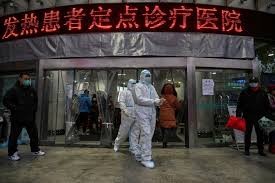
3. Rumors involving fabricating information about medical institutions treatment being “out-of-control” , which caused chaos in society

In view of the outbreak prevention and control has been upgraded to national action, the treatment or disposal of the epidemic should be absolutely based on the state’s authoritative information channels. Any act of fabricating the above-mentioned false information and disseminating it will easily cause great panic among the public, such fabrication is subjectively malicious and will harm society gravely. Therefore, it should be resolutely dealt with in accordance with the law.

4. Other rumors that tend to cause disorder

Indiscriminate fabrication of facts, such as exaggerating the death toll of victims, exaggerating the death rate of the disease, fabricating negative information such as so-called doctor “self-narratives” etc. This is not intended to provide goodwill and might rather cause easily a serious public panic. Therefore, such fabrications should be severely punished according to the law.

Useful link:

The Supreme People’s Court of The People’s Republic of China

How to Make Overtime Payment

Recently, the State Council decided to extend the 2020 Spring Festival holiday until 2 February 2020. At the same time, some local governments, such in Shanghai, announced that companies must delay resuming their work till 9 of Feb 2020. Many people now wonder: what’s the differences between extending the Spring Festival holidays and postponing going back to work?

Postponing going back to work was necessary for the control of the virus outbreak and that these days were “days off” and shall be paid overtime payment

The following will help:

On 28 January 2020, at the press conference held by the local government, officials from the Shanghai Social Security Bureau explained that postponing going back to work was necessary for the control of the virus outbreak and that these days were “days off”. Employees who don’t work during these days, must be paid by their employers in accordance with the terms stipulated in their labor contracts. For employees who have to work for any reason, the company shall arrange other times for rest in lieu or, shall pay overtime wages in accordance with related provisions. In another words, the company should pay two times of normal wages as overtime payment. While the Spring Festival holiday is a statutory holiday, a three times of normal wages has to be paid as overtime payment, if employees have to work during this holiday.

At the same time, the official recommended that companies should try and enable employees to work from home. If employees are working from home during these days as required by their companies, such work is considered to be “working overtime”. Companies shall therefore grant additional days of rest, or pay overtime wages in line with the law.

For more provisions about overtime payment, you may check our previous post:

Overtime Payment and Statutory Holiday

Useful link:

Ministry of Human Resources and Social Security of the People’s Republic of China

CNY Holiday Extension & Updates on Curbing Virus Outbreak

1.China extends Spring Festival holiday

The General Office of the State Council announced on 27 January 2020 that the Lunar New Year holiday will be extended until 2 February 2020 as a measure to contain the novel coronavirus outbreak.

The announcement also provides that:

Universities, primary and middle schools and kindergartens across the country will have to postpone their re-opening for the spring semester until further notice.

Employees unable to take leave due to epidemic prevention and control can take deferred holidays in accordance with the labor Law. Their wages and remuneration for the leave not taken should be paid in accordance with relevant policies.

2. Measures regarding the cities of Beijing, Shenzhen and Guangzhou

On 26 January 2020, related authorities in Beijing, Shenzhen, Guangzhou and Nanjing stated that their cities “will not be blocked”.

a) Beijing

A Beijing Municipal Transportation Commission spokesman said that “external traffic is basically normal”, the city is currently not cordoned off and also not about to be cordoned off. At present, Beijing suspended flights to and from Hubei. Other flights are operating regularly. All expressways and ordinary highways in Beijing are open, buses and subways are also maintaining regular operations. However, the measurement of temperature monitoring, ventilation etc. will be further enhanced.

b) Shenzhen

Information that Shenzhen’s going to be a “sealed-off city” is a rumor.

c) Guangzhou

Internal and external traffic is normal. Temperature monitoring is undertaken in the airport, public transport stations, docks and other places, in order to prevent the spread of the epidemic, especially to reduce imported cases, but there is no “sealed-off city-policy” currently in place.

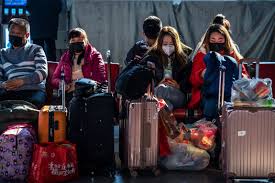
3. Guangdong demands people wear masks in public places

The Office of the Pneumonia Prevention and Control Command for the New Coronavirus Infection in Guangdong issued a notice on 26 January 2020, demanding that people have to wear masks in public places.

China announced on 27 January 2020 that the CNY holiday will be extended until 2 February 2020 as a measure to contain the novel coronavirus outbreak.

For this purpose, public places include:

(1) Hotels, guest houses, restaurants, cafes, bars, teahouses;

(2) Public bathrooms, barber shops and beauty shops;

(3) Cinemas, karaoke halls, video halls (rooms), amusement halls (room)s, dance halls, concert halls;

(4) Stadiums, Swimming Pools, Parks, Scenic Areas, Religious Places, Commercial Streets, Pedestrian Streets;

(5) Shopping malls (shops), bookstores;

(6) Waiting rooms in hospitals, waiting rooms (to board flights or boats), highway service areas, public transport (including online car-hailing and taxis);

(7) Exhibition halls, museums, art galleries and libraries;

(8) Other public places where people gather.

The notice requires operators and managers of public places to request persons to wear masks before they enter public places in which they operate, and to set up prominent and clear notices with regards to the obligation of wearing masks at the entrance to their premises.

Those who obstruct emergency response staff from performing their duties, violate the “Law of the PRC on Administrative Penalties for Public Security”, and constitute violations of public security administration, shall be punished by the public security organs in accordance with the law.

The notice shall come into effect as of the date of publication, and the date of termination shall be announced separately.

Related posts:

Notice on Tackle Coronavirus Effect on Employment

China Classifies Coronavirus as Category B Infectious Disease

Useful link:

THE STATE COUNCIL OF THE PEOPLE’S REPUBLIC OF CHINA

Notice on Tackle Coronavirus Effect on Employment

On 24 January 2020, the Ministry of Human Resources and Social Security of the PRC announced its “Notice on the proper treatment of labor relations during the prevention and control of the pneumonia outbreak caused by the new coronavirus infection”.

China announced  “Notice on the proper treatment of labor relations during the prevention & control of the pneumonia outbreak caused by the new coronavirus infection”.

Main content of the notice as follows:

1. For pneumonia patients, suspected patients, close contacts during their isolation treatments or during medical observation periods and for employees who are unable to fulfill their employment obligations as a result of the government’s quarantine measures or other emergency measures, affected employers shall pay employee’s remuneration for respective periods. Employers shall not, in accordance with Article 40 or Article 41 of the Labor Contract Law terminate respective labor contracts with said employees. Meanwhile, if the labor contract might expire during aforementioned periods, it shall be extended in line with the time of absence due to the medical period of the employee, the medical observation period or the period of isolation or the end of the emergency measures taken by the government.

2. If an enterprise encounters productional and operational difficulties caused by the epidemic, it may stabilize the operation by means of adjusting remuneration, rotation, shortening working hours, etc. by consensus with the employees, so as not to lay off or lay fewer people off. Eligible enterprises may enjoy a subsidy in accordance with the provisions. If an enterprise stops operation in one wage period, the enterprise shall pay the wages of its employees in accordance with the standards stipulated in the labor contract. If the employee provides regular work, the wage paid by the enterprise shall not be lower than the local minimum wage. If employees do not provide regular work, the enterprise shall pay the living expenses, and the living expenses standard shall be implemented in accordance with the methods prescribed by the provinces, autonomous regions and municipalities directly under the Central Government.

On 25 January 2020, the local authority in Guangdong announced its detailed notice for Guangdong province, except the provisions of above-mentioned notice. The new notice further provides:

For employees who have not returned to resume work in Guangdong in time due to the outbreak, after consensus with the employees, the enterprise may give priority to arranging paid annual leave for the employees. Among them, the cumulative employment of employees is up to 1 year but less than 10 years, the annual leave shall be 5 days; up to 10 years but less than 20 years, the annual leave shall be 10 days; up to 20 years of employment, the annual leave shall be 15 days. Employees receive the same salary during their paid annual leave as during regular working hours.

The notice also provides that if the enterprise fails to arrange the work of the employees, the living expenses of the employees shall be paid in accordance with not less than 80% of the local minimum wage standard, and the living expenses shall be paid until the enterprise resume operation or terminate the labor relations.

We believe local governments in other parts of China will also issue their notices shortly to announce measures if and when needed accordingly.

Useful link:

Ministry of Human Resources and Social Security of the People’s Republic of China

China Classifies Coronavirus as Category B Infectious Disease

The government of China just announced to take further steps to control the outbreak of coronavirus-related pneumonia. This form of pneumonia was just classified as an infectious disease in accordance with the law, as was decided at the State Council’s executive meeting chaired by Premier Li Keqiang on 20 January 2022.

The National Health Commission of the PRC issued announcement No. 1 on January 20, 2020 to classify pneumonia caused by infection of the novel coronavirus as a category B infectious disease according to the “Laws of the People’s Republic of China on the Prevention and Treatment of Infectious Diseases“”. However, China will take preventive and control measures of category A infectious diseases to effectively fight against this form of pneumonia. In line with this, the pneumonia has also been classified as a quarantinable disease at the borders according to the “Frontier Health and Quarantine Law of the People’s Republic of China.”

China is taking further steps to control the outbreak of coronavirus-related pneumonia, which was just classified as an infectious disease

The recent meeting called for intensified inter-agency efforts to prevent the disease from spreading. It was decided in the meeting of 20 January that corresponding prevention and control measures will be launched to tackle the disease as a public health emergency.

The measures of prevention and control will be particularly stepped upin the city of Wuhan, where the markets concerned were shut down, wildlife control tightened, and fever screening made mandatory at airports, bus stations, train stations, and ports.

Local governments must, in accordance with their local conditions and capabilities, carry out ventilation, sterilization and temperature measures as needed in key venues and public transportation facilities. At the same time, the monitoring, pre-examination and triage of the disease must be enhanced to ensure that infections will be promptly detected and effectively contained and handled.

It was further decided at the meeting that high-caliber personnel and medical resources will be pooled in tackling the disease. Sufficient funding will be made available to provide patients, particularly those suffering from severe conditions, with the best possible care. The meeting urged tight control of infections at hospitals and precautionary measures for medical workers.

“All prevention and control measures needed must be duly delivered, and inter-agency efforts enhanced to ensure earliest possible detection, reporting, quarantine and treatment of the disease, and to keep the fatality rate at a minimal level. Precautions in hospitals should be strengthened,” Premier Li said.

“The government should make timely updates about the disease and be highly responsive to public concerns to shape an objective and rational public attitude towards the disease. We also need to keep the public better informed about how to protect themselves from winter infectious diseases,” he added.

The meeting required openness and transparency to keep the public informed of developments and to ensure prevention and control in a timely and objective manner. The meeting also called for closer communication and cooperation with the World Health Organization, the countries concerned, and the regions of Hong Kong, Macao and Taiwan.

“We must communicate and share information with international organizations and overseas. Research on the disease must be intensified to work out effective prevention and treatment. This way, our efforts may be more effective,” Premier Li said.

Maternity Leave and Allowances in China

The provisions on medical expenses and maternity allowances for female employees are mainly to be found in the “Special Provisions on Labour Protection for Female Employees” (“Special Provisions”) and the “Population and Family Planning Law of the People’s Republic of China” (“Family Planning Law”)

I. Maternity benefits:

Article 8 of the Special Provisions provides: “The maternity allowance for female employees during maternity leave shall be paid by the maternity insurance fund in accordance with the standard of the average monthly salary of all employees in the previous year, if this employee is covered by maternity insurance; or will be paid by the employer if this employee is not covered by maternity insurance.

If employer does not provide social insurance to female employees in time, the employer must pay salary to the female employee during her maternity leave.


The medical expenses of a female employee who has given birth or aborted shall be paid by the maternity insurance fund in accordance with the items and standards prescribed by this fund if this employee is covered by maternity insurance, or shall be paid by the employer if this employee is not covered by maternity insurance.”

Please note: If a female employee is already paid maternity allowances; she will no longer be paid salary by the employer. However, if the employer does not provide social insurance to female employees in time, the employer must pay salary to the female employee during her maternity leave. Any female employee can’t enjoy both at the same time.

2. Maternity leave

Article 7 of the Special Provisions provides: “Female employees giving birth shall be entitled to a maternity leave of 98 days, of which 15 days may be taken before delivery; in the event of dystocia, the female employee shall be entitled to an additional 15 days; in the event of multiple births, the female employee shall be entitled to an additional 15 days for each additional baby.

A female employee who suffers a miscarriage during the first four months of pregnancy shall be entitled to 15 days of maternity leave; a female employee who suffers a miscarriage after the fourth month of pregnancy shall be entitled to 42 days of maternity leave.

3. Extended maternity leave

In addition, according to Article 25 of Family Planning Law: “Couples that give birth to children in compliance with the provisions of laws and regulations may be entitled to rewards of extended maternity leave or other benefits.”

In other words, 98 days of maternity leave is the least maternity leave available to every female employee, there will be extra maternity leave applied to different situations. However, China does not yet provide a unified regulation on how long the extended maternity leave will be, it’s provided by each provincial or municipal government.

We have collected and classified regulations of all provinces or cities, and share the classification we made as follow:

  • 30 days of extended maternity leave:

Beijing, Shanghai, Tianjin, Zhejiang, Hubei, Jiangsu, Chongqing

  • 50 days of extended maternity leave

Guangxi

  • 60 days of extended maternity leave:

Anhui, Shanxi, Jiangxi, Ningxia, Sichuan, Shandong, Hunan, Liaoning, Hebei, Yunnan, Inner Mongolia, Jilin, Guizhou, Qinghai

  • 80 days of extended maternity leave:

Guangdong, Shenzhen

  • Three months of extended maternity leave:

Henan, Hainan

Other:

Total maternity leave of 180 days (including 98 days) – Heilongjiang, Gansu Total maternity leave of 158-180 days (including 98 days) – Fujian

For more information related, you may check our previous post: Female employee rights in China

Useful link:

Ministry of Human Resources and Social Security of the People’s Republic of China

The Protection of Trade Secrets in China

In China, the primary law governing the protection of trade secrets is the “Anti-Unfair Competition Law of the PRC (“AUCL”)”. Yet just like many laws in China, judicial interpretations provide a far more detailed and enlightening description of this subject matter and guidance for court hearings. The latter is the Supreme People’s Court Interpretation Regarding Several Issues concerning the Applicable Law in Trials of Unfair Competition Civil Cases (“SPC interpretation”).

According to the AUCL, trade secrets refer to commercial information such as technical information and operational information, which is not known to the public, has commercial value and for which the rights holder has undertaken corresponding confidentiality measures to protect it. In other words, such information has to contain the following three elements to be considered a “trade secret”:

A. Information not publicly known;

B. Granting economic benefits and practical applicability to the rights holder; and

C. Confidentiality measures have been undertaken by the rights holder.

trade secrets refer to information not known to the public, has commercial value, the rights holder has undertaken confidentiality measures to protect it

According to the Regulation of the State Administration for Industry and Commerce on Prohibiting Infringement upon Trade Secrets ( “SAIC regulation” ), these information includes design, procedures, formula of products, production processes , manufacturing techniques and management know-how, name lists of customers, information on resources, production and sales strategies as well as best-and-final offers for bids and the content of bidding documents etc.

However, according to current “SPC interpretation”, the customer list is regarded as a trade secret and generally refers to the customer’s name, address, contact information and purchase & transaction habits, intentions, content, etc. which constitute unique customer information that is different from information the general public is privy to. In particular as such information includes a customer roster, as well as particular customers with whom long-term and stable trading relationships have already been established.

The SPC interpretation further clarifies what constitutes a trade secret as per below.

I. Information not publicly known

This fact is actually implied by the identification as a “trade secret”. This criterion is met if the information is not commonly known or easily accessible to relevant people in a related field. However, information shall be considered publicly known, if it:

1) is a kind of common sense for people in related fields or the practice in the related industry;

2) only contains sizes, structures, materials,components or simple combinations of such product details, which can be easily obtained by observing the goods in question;

3) has been publicly disclosed in publications and other media, in seminars or exhibitions,

4) can be obtained through other public channels or readily available at no cost.

II. Economic benefits and practical applicability

The information is supposed to grant economic benefits and has practical applicability, if it has actual or potential commercial value, and may enable competitive advantages for the rights holder.

III. Confidentiality measures

If a party takes measures to protect information that is reasonable in view of the commercial value of the information, the confidentiality measures requirement is satisfied. A court should determine whether confidentiality measures have been taken based upon the following factors:

a) Characteristic of the media that contain the relevant information;

b) The right holder’s intention to protect the information;

c) Whether the protection measures are clearly recognizable;

d) Whether it would be easy for others to obtain the information from a public source

Examples of strategies that qualify as reasonable measures to maintain the confidentiality of information include:

1) Restriction of access to the information and only allowing access by people with the “need-to-know”;

2) Preventive measures with regards to the physical carrier of the information such as locks;

3) Marking of the information carrier as “confidential”;

4) Using a password or code to access the confidential information;

5) Signing of non-disclosure agreements;

6) Limiting visitor access to premises or facilities where confidential information is held or the requirement of visitors to maintain confidentiality;

7) Other reasonable measures to ensure the confidentiality of information.

Useful link:

State Administration for Market Regulation

China Is Keen on Tracking Large Cash Flows Now

In November 2019 the Chinese People’s Bank already announced the “Pilot Implementation of Large Amounts of Cash Management in Hebei Province, Zhejiang Province and Shenzhen” for public comments. Its aim is to manage the amount of large cash flows.

According to the draft, the pilot will last for two years and will be implemented in different regions step by step.

The first step is to fully regulate large amounts of cash managed by commercial banks in Hebei.

After the pilot has been successfully implemented in Hebei Province the second step aims to fully regulate large cash positions managed for business by commercial banks in Zhejiang and Shenzhen. Furthermore, the measures try to get a handle on large cash withdrawals and the cash management of enterprises in wholesale and retail business, real estate sales, the construction industry, and car vendors in Zhejiang. In addition, the pilot aims to strengthen the management of large amounts of cash held in private accounts and undertakes to monitor large amounts of cash entering and exiting China respectively RMB cash operations in Hong Kong and Shenzhen. Last but not least the central bank uses the pilot to explore measures to promote the reporting of personal income in appropriate regions.

It is an important  for China to strengthen the management of large amounts of cash in circulation, in an effort to curb its use for illicit activities.

What’s the purpose of cash management?

Although non-cash payments have been developing rapidly in recent years in China, the volume of large amounts of cash transactions continues to grow, according to central bank officials. Large amounts of cash withdrawals have become an important channel for the cash in circulation. Internationally, major developed countries generally treat the management and supervision of large amounts of cash as an important part of social governance and international cooperation, hence strict control measures are adopted. It is an important policy goal for China to strengthen the management of large amounts of cash in circulation, in an effort to curb its use for illicit activities.

Why pilots in Hebei, Zhejiang and Shenzhen?

The basis for large amounts of cash managed by financial institutions is rather well developed already in Hebei. Furthermore, Zhejiang and Shenzhen are the key areas of cash input nationally. In Zhejiang, the use of large amounts of cash in certain industries are rather prominent and large amounts of cash held in personal accounts are outstanding. Apart from that RMB cross-border flows between Shenzhen and Hong Kong are also very common.

After the pilot, the central bank will evaluate the results in order to improve its cash management. At the same time, the results of the cash management study shall be implemented, to gradually promote relevant cash management measures nationwide.

Identification of large amounts of cash.

According to the pilot, the starting point for “large amounts of cash” held in public accounts in China is 500,000 yuan. However the starting point for private accounts may vary from city to city. For example, it might be 100,000 yuan in Hebei Province, 300,000 yuan in Zhejiang Province and 200,000 yuan in Shenzhen. For the vast majority of ordinary people, their daily cash usage will be lower than the prescribed starting points above. Hence, the central bank’s pilot will not affect them in any way.

Useful Link:

THE PEOPLES’S BANK OF CHINA